
Properties, units and tenants
You add a flat, a shop or a whole building as a property; each flat in a building is a separate unit. Tenants, guarantors and owners are recorded once as persons and selected on leases.
- Fields such as national ID number, tax number and IBAN are encrypted with a separate key; they are masked on screen, only authorized users can reveal them and every reveal is logged.
- Properties and persons you no longer use are archived, not deleted; past records stay intact.
Leases and rent terms
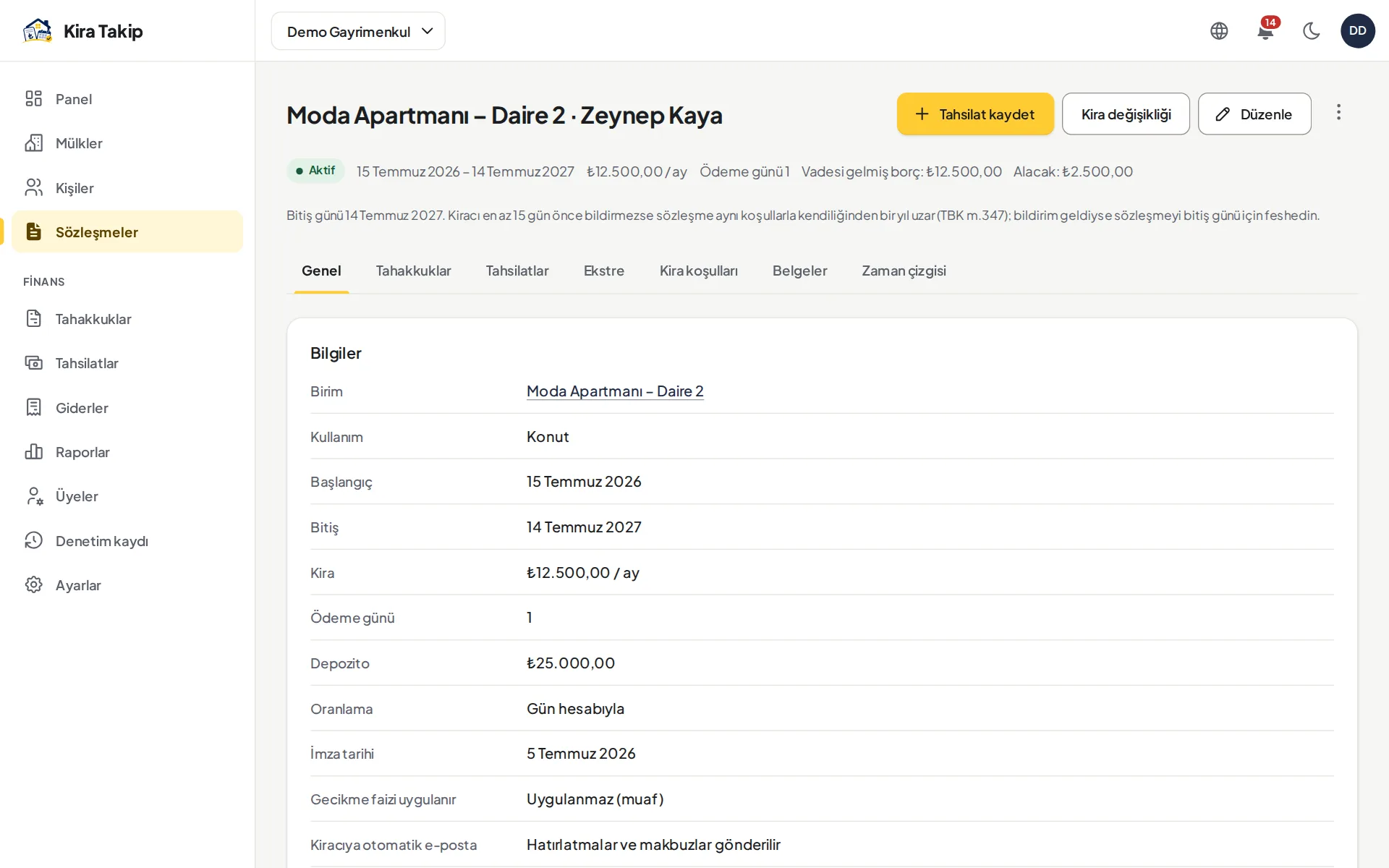
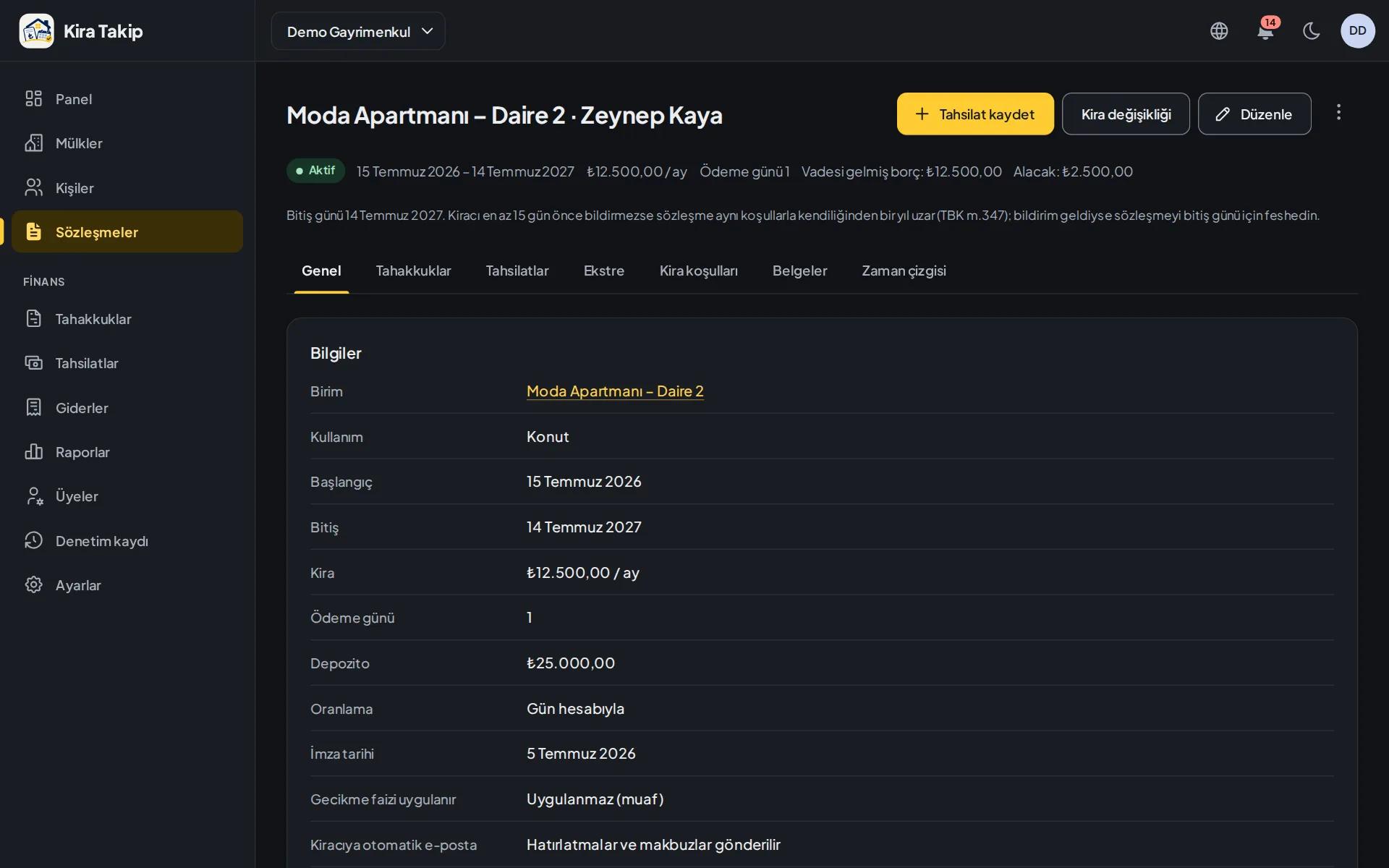
A lease holds the start and end dates, rent, due day, deposit and rent increase rule.
- Extensions, terminations and renewals are written to the lease timeline.
- An expired lease for a home or covered business premises renews for one year unless notice of termination is recorded (Turkish Code of Obligations, art. 347).
- When the rent changes, the old term is not deleted; a new term is added, so you always see which rent applied on which date.
- A unit cannot have a second lease over the same dates.
Legally capped rent increases
For the new lease year, the rent increase may not exceed the change in the 12-month average consumer price index of the previous lease year (Turkish Code of Obligations, art. 344). Kira Takip:
- applies the 12-month average published by TÜİK for the month before the increase month;
- compares the new rent you enter with this cap and warns you if it is higher;
- also applies earlier rules, such as the 25% cap for homes between 2022 and 2024, to increases on those dates.
Rules and index values are kept with their history inside the product and updated when a new value is published.
Monthly rent charges
Once a lease is started, each period's rent is charged automatically, with the due date taken from the lease's due day. You add building fees, utilities, taxes and other items manually.
- A month in which the lease starts or ends is prorated by days.
- Outstanding charges for earlier months can be created in one go from the lease page.
- A wrong charge is never deleted; it is voided with a reason and replaced by the correct one.
Payments, allocation and receipts
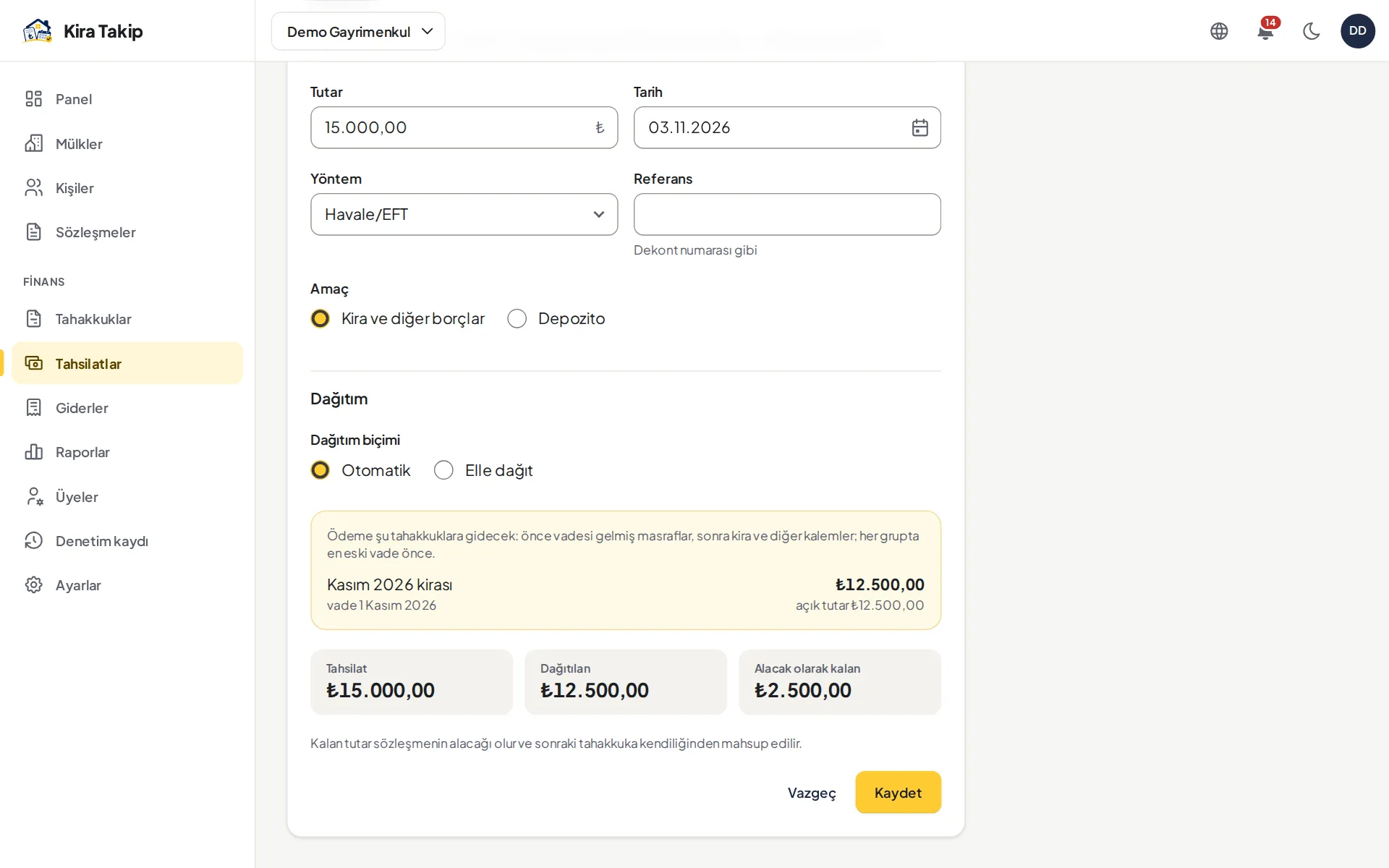
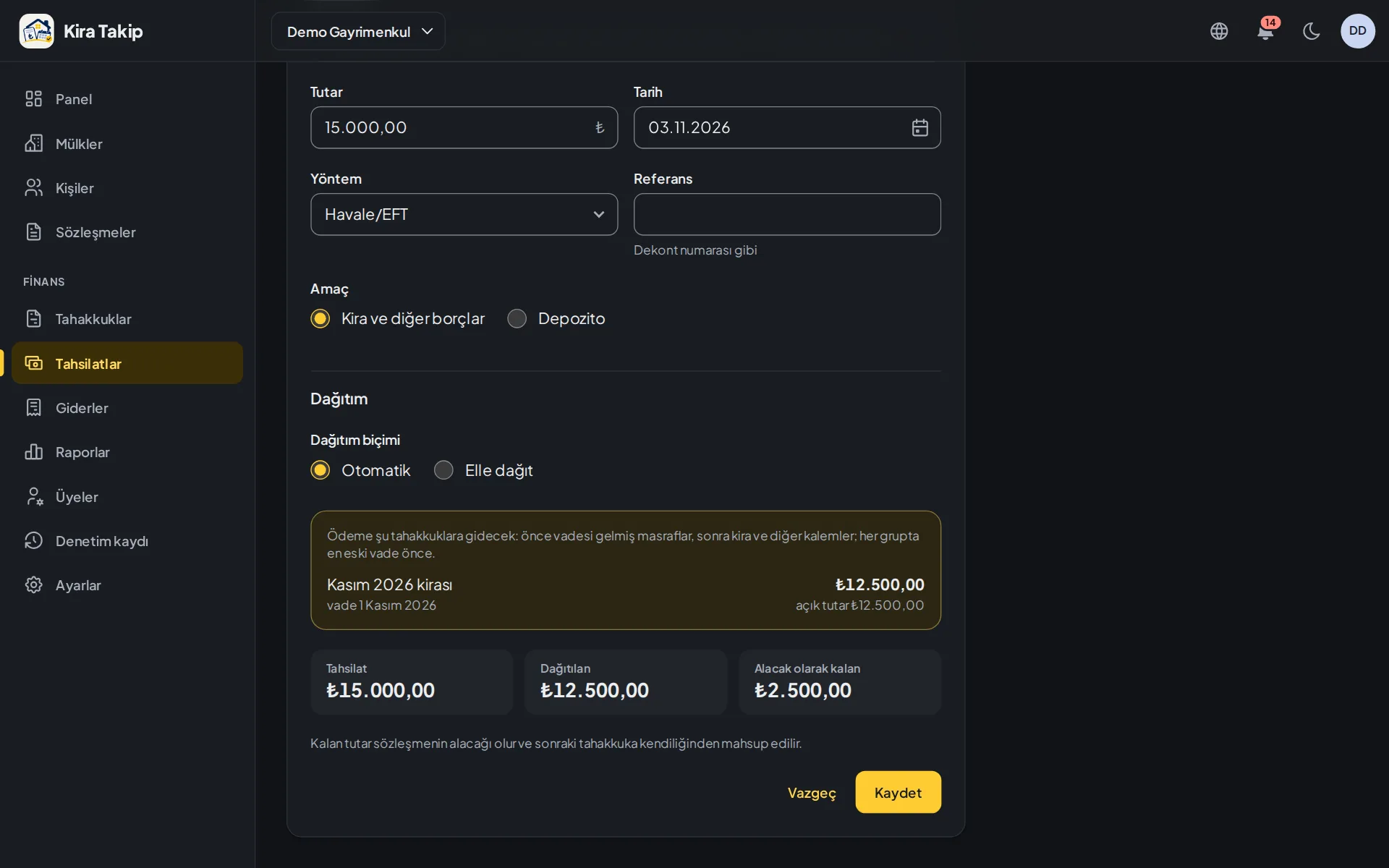
You record an incoming payment with its date, amount and method; Kira Takip allocates it to open charges. By default costs are paid first, then rent; you can choose oldest first instead or allocate manually.
- Over- or early payments are kept as credit and automatically offset against newly created charges.
- Each payment's receipt is ready on screen and as a PDF; optionally it is emailed to the tenant automatically.
- If a payment is voided or corrected, its allocations are corrected with it.
Deposits and expenses
Deposits received, deductions and refunds are tracked separately from the lease account; on renewal the deposit stays with the previous lease. You enter the property's expenses by category, such as maintenance, repairs, building fees, utilities, taxes and insurance; the net income report deducts them from collections.
Late payment interest
You can set a daily or monthly percentage late payment interest for your organization. The rate is capped at twice the statutory interest rate (Turkish Code of Obligations, art. 120). A fixed late fee cannot be selected: for homes and covered business premises, a penalty clause for late payment of rent is invalid (art. 346). You can exempt any lease from interest and waive the accrued interest of a charge.
Reminders and notifications
- For you: a daily summary email and in-app notifications for due and overdue rent, ending leases and increase anniversaries.
- For your tenant (optional): due date and late payment reminders and receipt emails. Tenant emails use fixed templates, and tenants can stop them at any time.
Accountant access and period lock
You invite your accountant by email. The accountant sees records and reports; if you allow it, they can also record payments, expenses and notes. You decide the last day of their access.
When you lock a finished month, no financial record in that month can change. Only an owner can unlock it, with a reason.
Reports and exports
| Report | The question it answers |
|---|---|
| Collections | What was collected in the period? |
| Overdue payments | Who owes how much past the due date? |
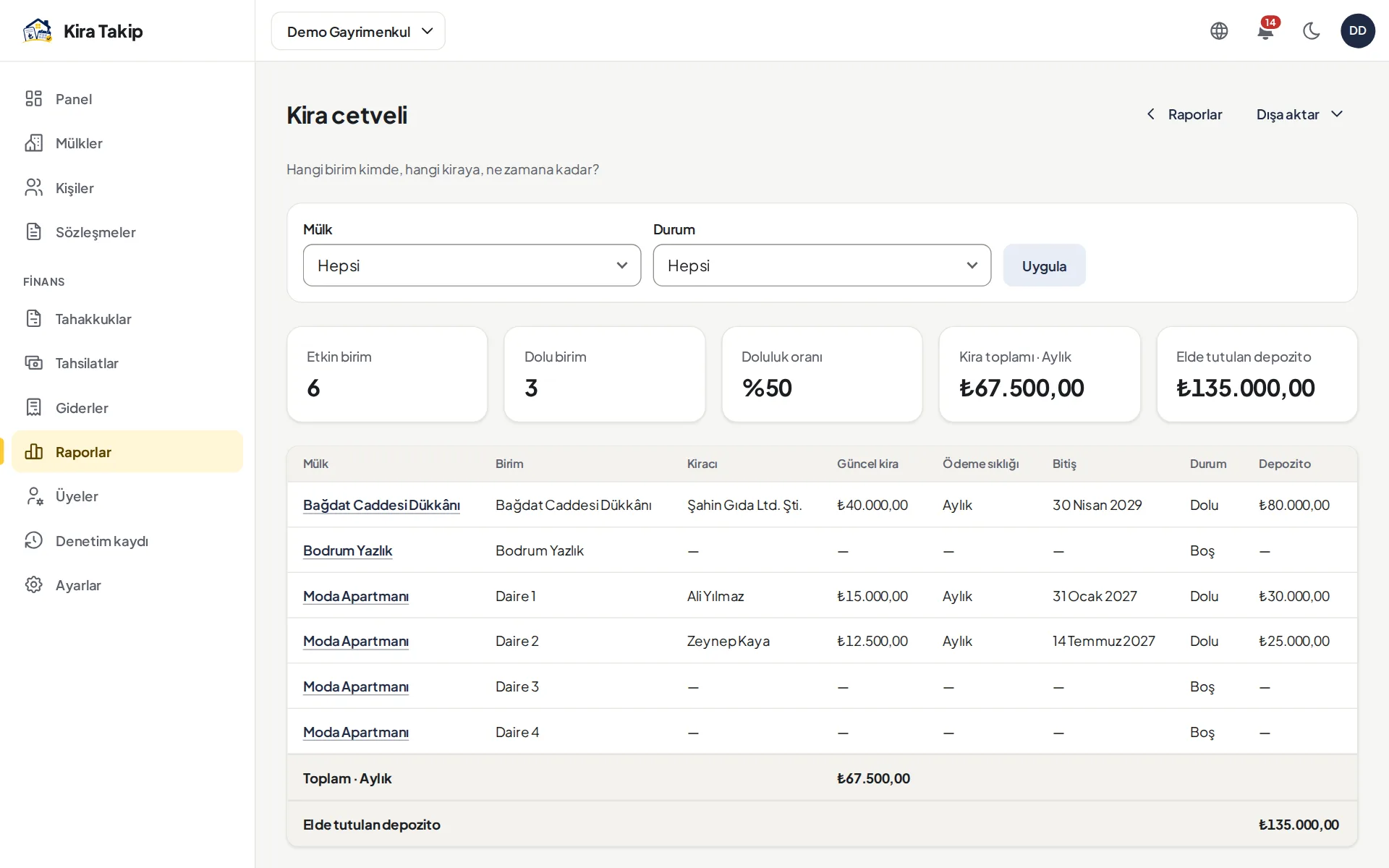
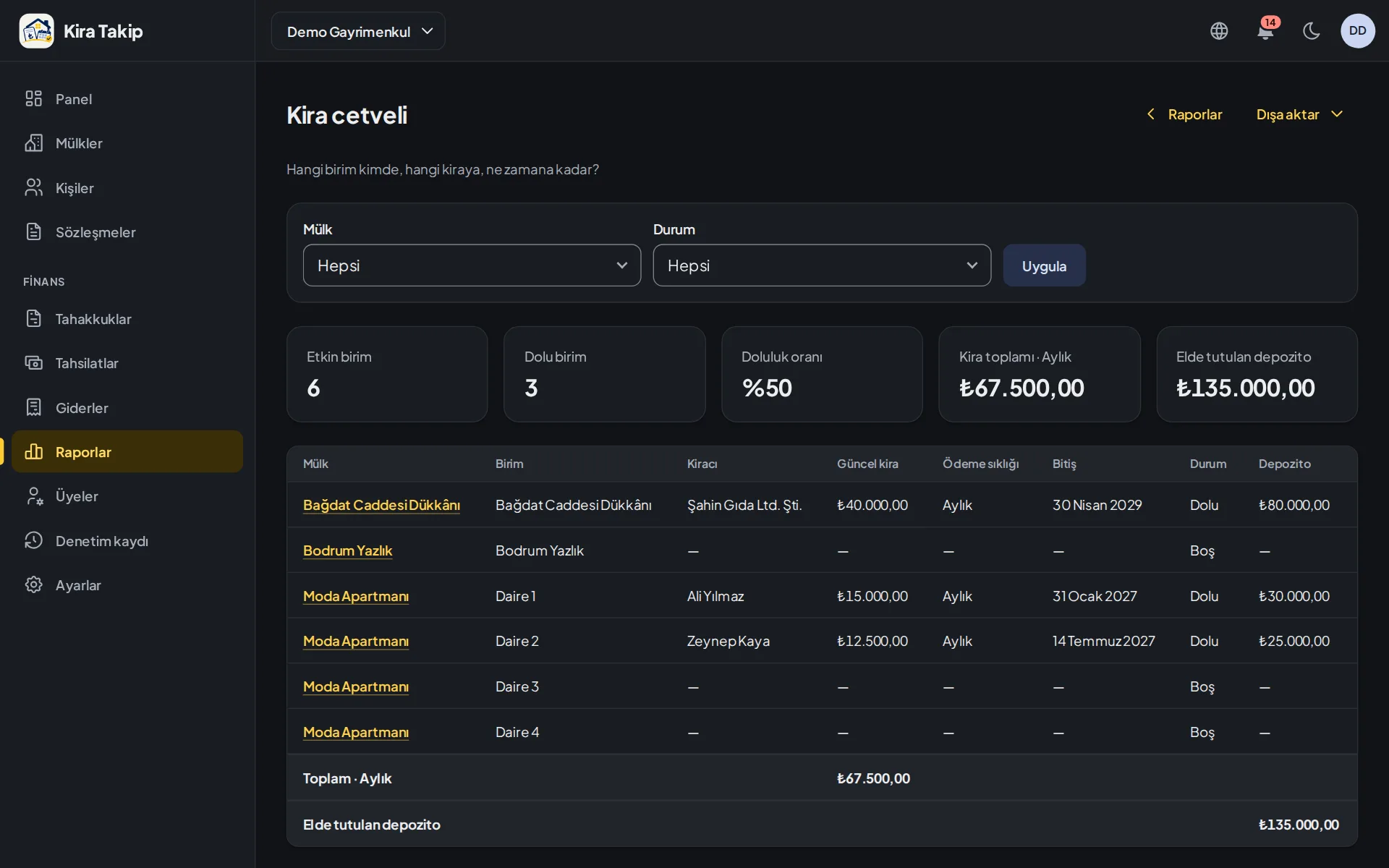
| Rent roll | Which unit is with whom, at what rent, until when? |
| Expenses | What was spent on what? |
| Net income | Collections minus expenses? |
| Deposits | Where do deposit balances stand? |
| Lease endings | Which leases end soon, which have a rent increase coming? |
| Ledger export | Which entries go to the accounting software? |
| Period summary | Does the reconciliation hold before closing? |
Reports download as CSV, Excel or PDF; lease statements as Excel or PDF.
Documents
Upload the scanned lease, the handover report or invoices to the lease (PDF, JPEG, PNG, WebP). Uploaded files are scanned for viruses.
Security and personal data
- Two-factor authentication (TOTP) and recovery codes; a "two-factor authentication required" setting for the organization.
- See open sessions and devices and close any of them; you get an email when you sign in from a new device.
- Every change is written to the audit log: who changed what, and when.
- Organizations' data is separated at database level.
- You can download your personal data, delete your account and export all of your organization's data (KVKK).